One buying decision separates a good first day on the water from a frustrating one, and that's picking the right fly rod. Fly rods are categorized by four things: style, weight, length, and action. Each one affects what fish you can target and where you can fish.
This guide covers the main rod styles (single-hand, switch, and Tenkara), how weight determines your target fish, how length matches your water type, and which setup works best for beginners. By the end, you'll know exactly what to look for.
Key Takeaways
- Three rod styles: Single-hand rods cover most freshwater situations. Switch rods handle large water and long casts. Tenkara rods use a fixed line with no reel and suit small mountain streams.
- Weight matches fish size: The rod weight number (1 to 14) tells you what size fish the rod handles. Heavier numbers target bigger fish.
- Length matches water size: Shorter rods cast accurately in tight, brushy streams. Longer rods reach across open rivers, lakes, and windy conditions.
|
Rod Type |
Best For |
Typical Length |
|
Single-hand |
Most freshwater fishing |
7 to 9 ft |
|
Switch / Two-hand |
Large rivers, limited backcast room |
10 to 12 ft |
|
Tenkara |
Small streams, simplified setup |
11 to 15 ft telescoping |
What Are the Main Types of Fly Rods?
Fly rods fall into three main styles. Each one is built for a different fishing situation, and choosing the wrong style early on makes everything harder. Here's what separates them.

Single-Hand Fly Rods
A single-hand fly rod is the standard fly rod that most people picture. You hold the handle with one hand and cast with your dominant arm. A fly rod is a lightweight, flexible rod designed to cast a weighted fly line (a thick, coated line that carries the fly through the air) rather than a heavy lure like you'd use with a spinning rod.
Single-hand rods cover the widest range of situations, from small mountain streams to large open lakes. Single-hand rods are available in weights 1 through 14 and lengths from 5'6" to around 10 feet. Wild Water's 5/6 fly fishing combo is a single-hand setup, which is why single-hand rods appear in most beginner kits as the easiest style to learn on and the most practical for everyday freshwater fishing.

Switch Rods (Two-Hand Rods)
A switch rod is a longer fly rod designed to be cast with both hands. That design lets you cast farther and with less backcast room than a single-hand rod can manage. Backcast refers to the part of the fly cast where the line travels behind you before you drive it forward.
Switch rods work best on large rivers, big open lakes, and saltwater situations. The name "switch" comes from the ability to switch between single-hand and two-hand casting on the same rod, which gives switch rods their core versatility. The longer rod requires more sweep room on the stroke, which rules switch rods out for tight, tree-lined streams. Wild Water's switch rod fishing kits are set up for anglers ready to fish bigger water.

Tenkara Rods
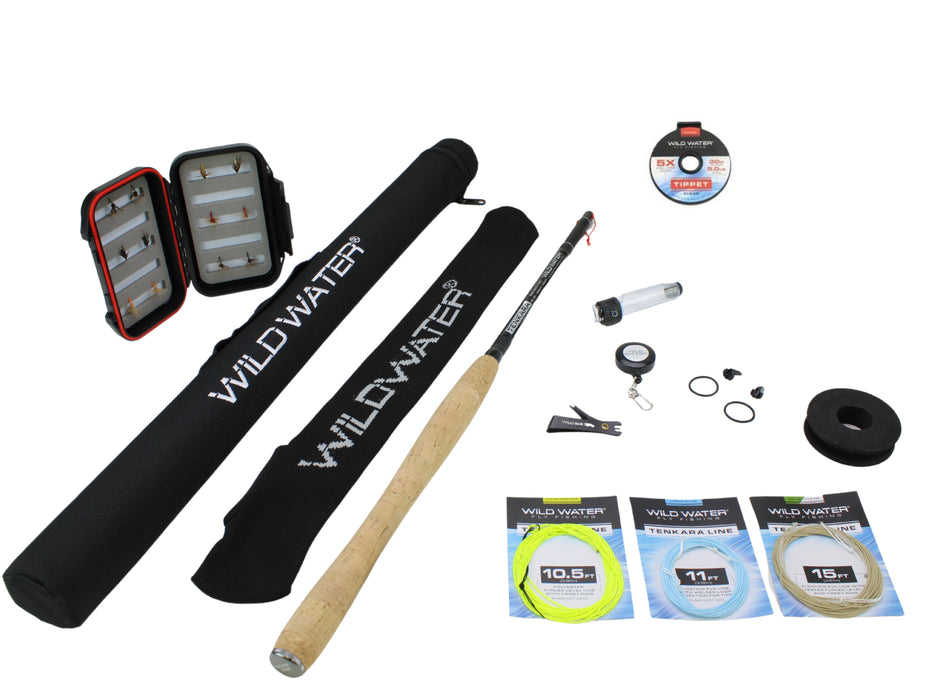
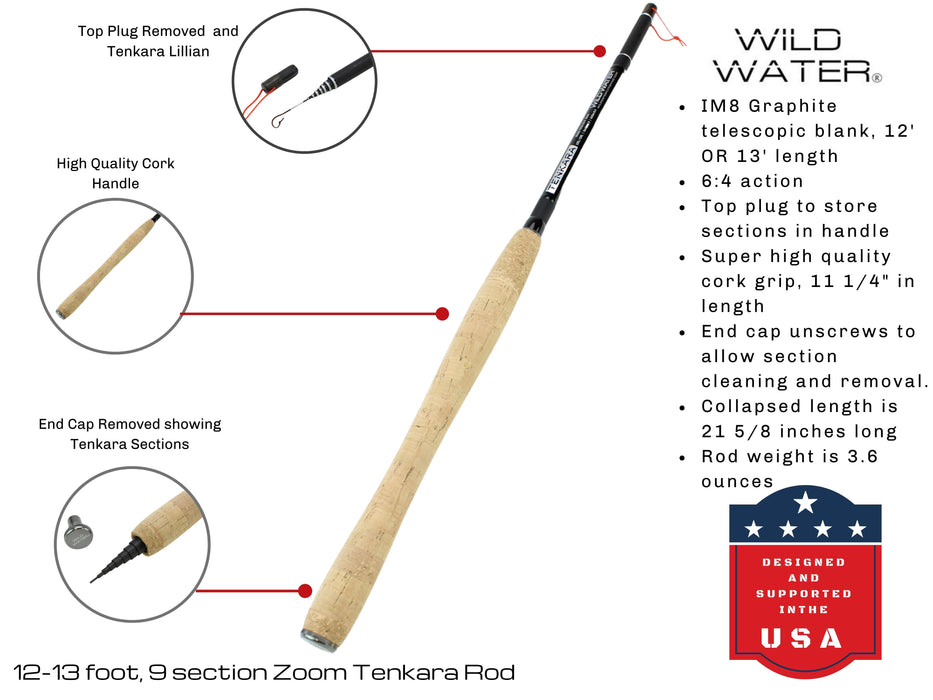
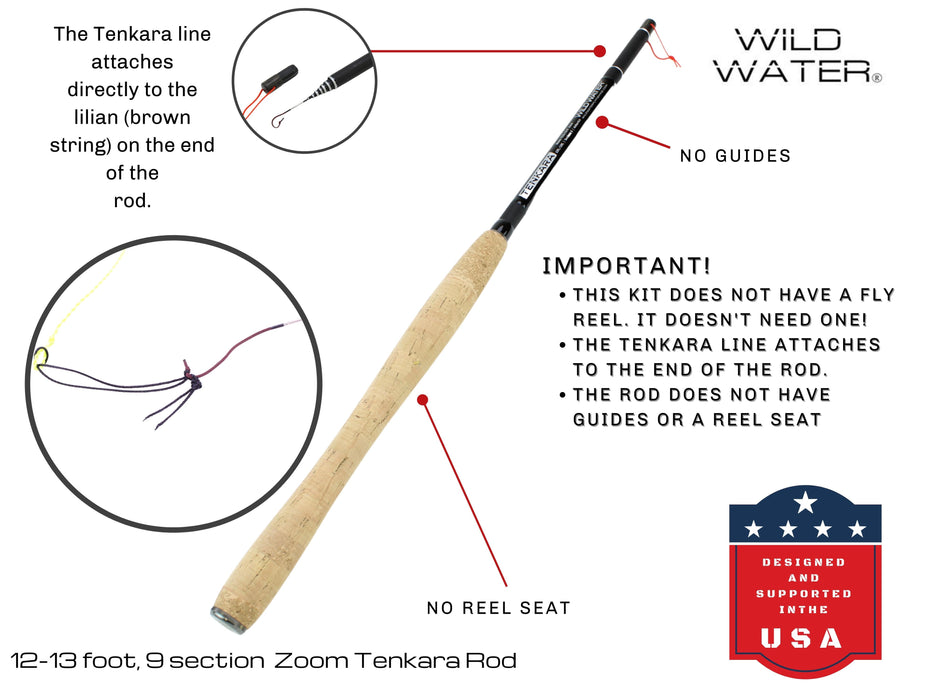
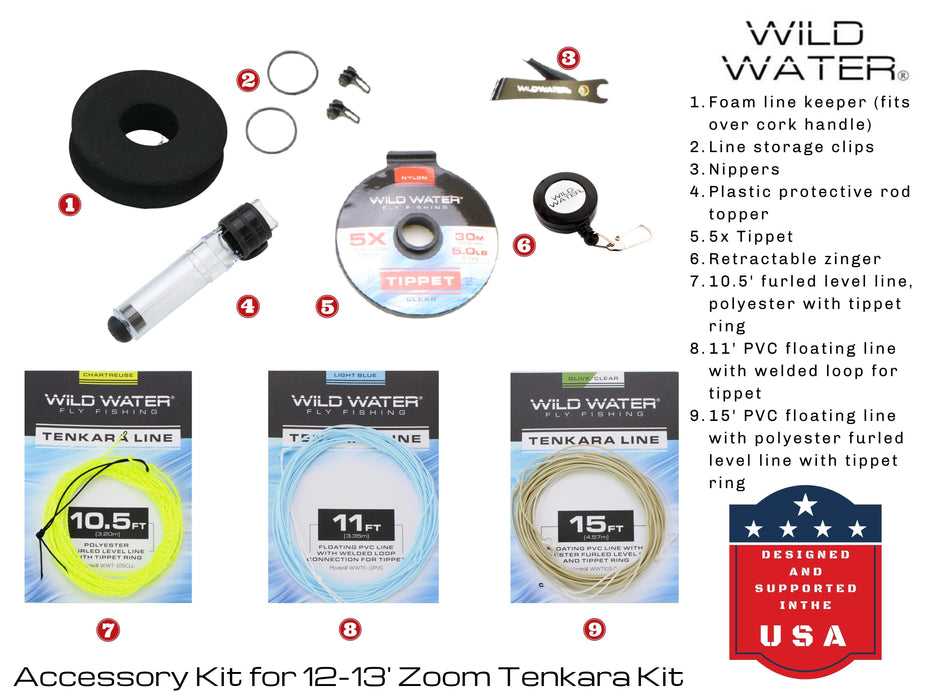
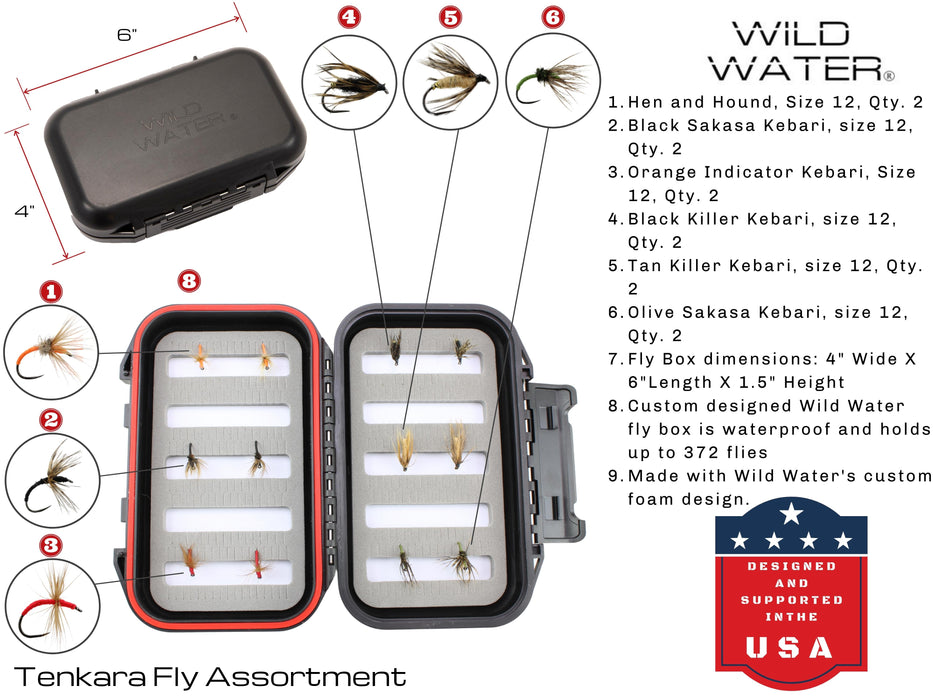
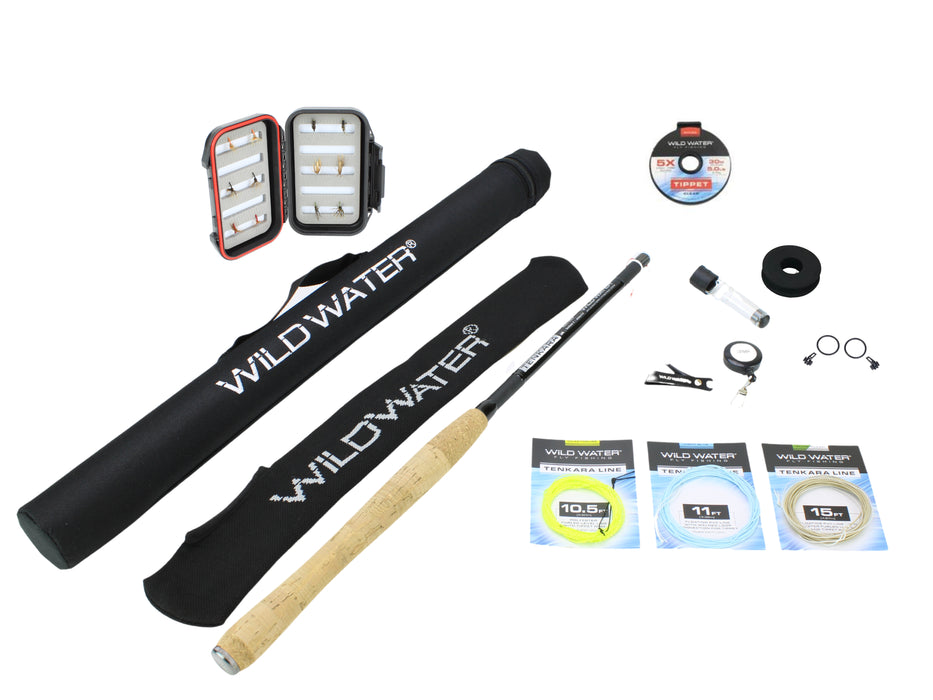
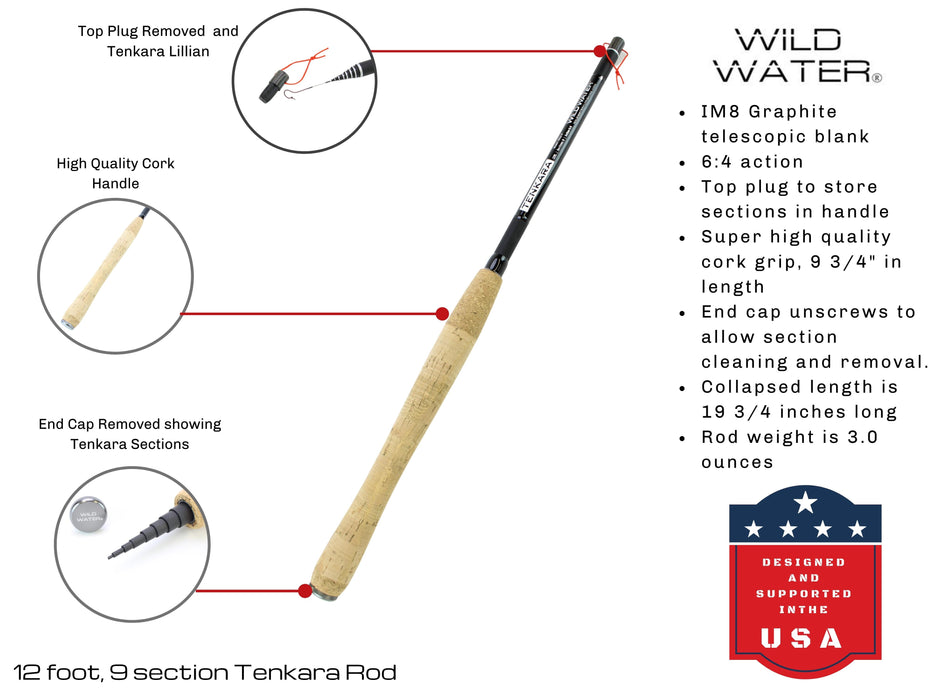
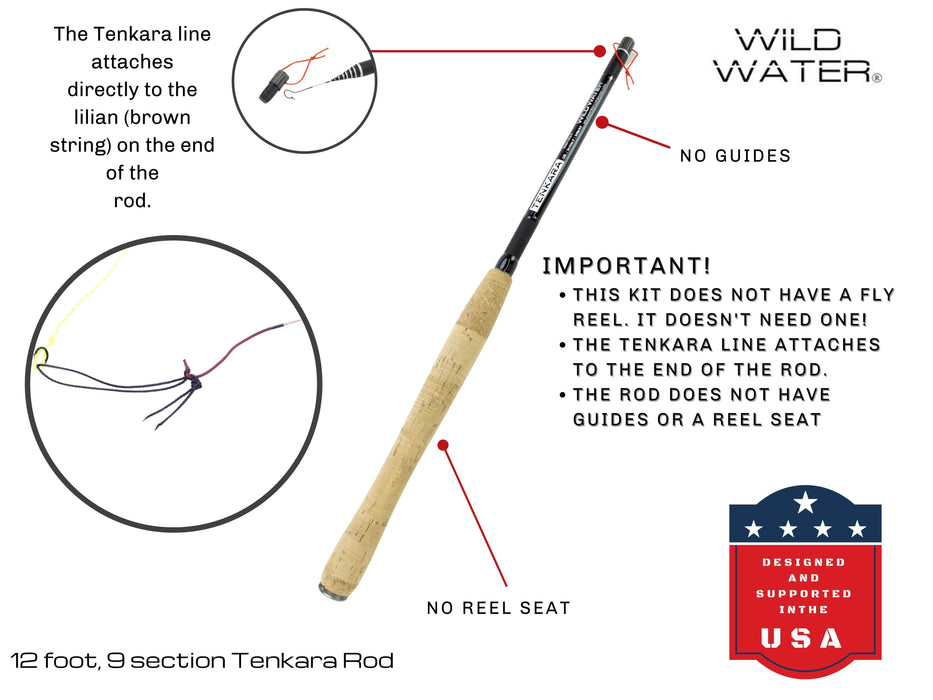
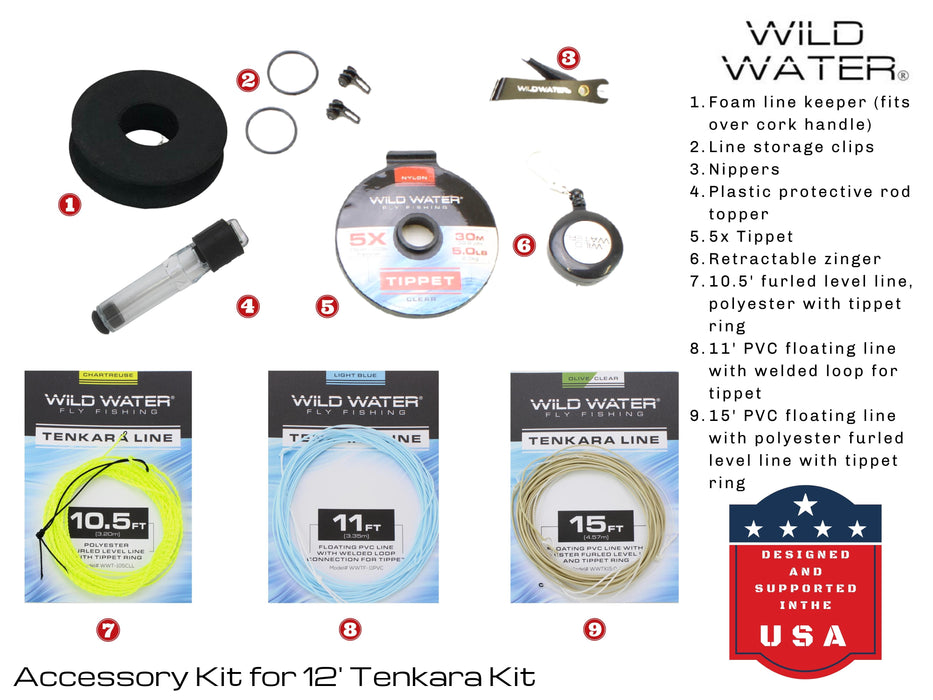
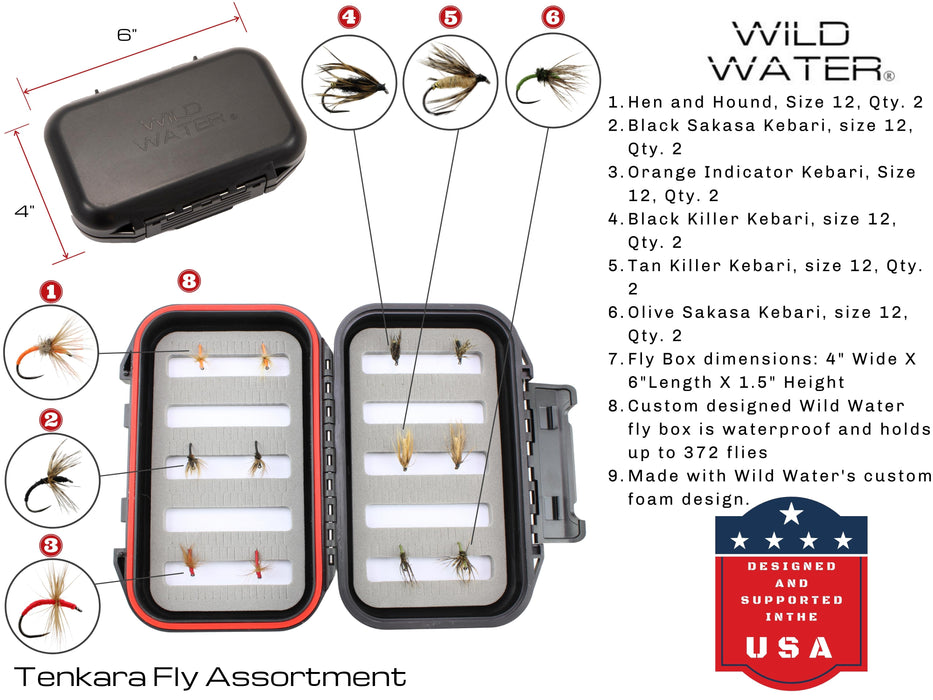
A Tenkara rod is a telescoping fly rod with no reel. The line attaches directly to the tip of the rod. Tenkara is a Japanese fixed-line fly fishing method developed for small mountain streams, and Tenkara offers a much simpler setup than a standard fly rod rig because Tenkara requires no reel, no running line, and no fly line to manage or cast correctly.
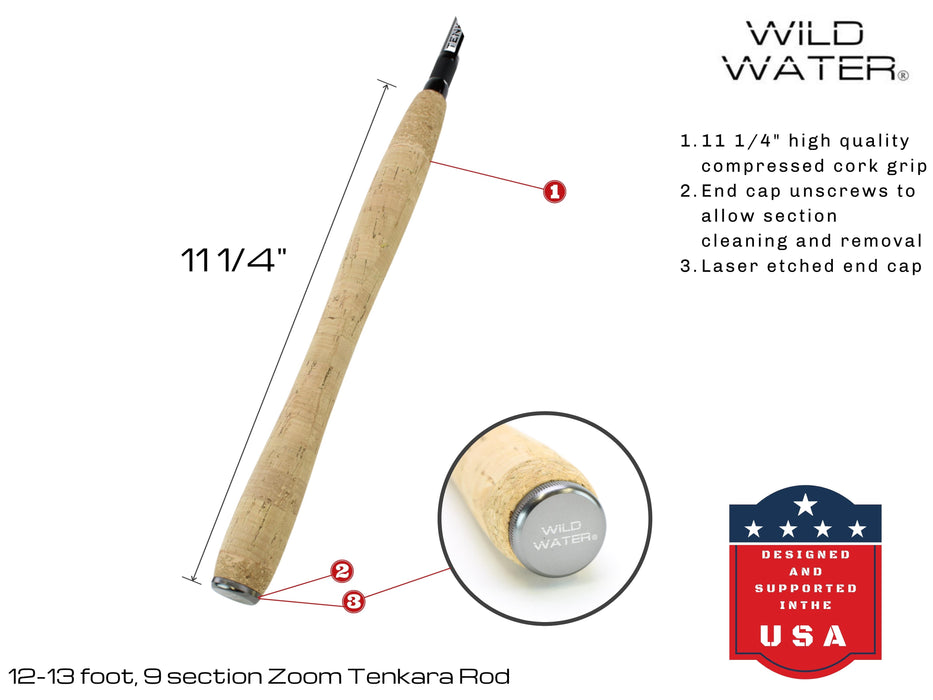
Many beginners who feel overwhelmed by gear find that Tenkara clicks faster because Tenkara has fewer moving parts than any other fly fishing style. Wild Water's 7ft-8ft Zoom Tenkara Starter Package is the most accessible way to try the method without building a kit from scratch.

What Fly Rod Weight Do You Need?
Once you know which rod style fits your situation, rod weight is the next decision. The weight number, from 1 to 14, tells you what size fish the rod is built to handle. Here's how to match weight to your target species.
Fly Rod Weight Chart by Species
Match rod weight to the size of the fish you're after, not just the size of the water. Fly rod weight, also called line weight, refers to the weight of the fly line the rod is designed to cast. A heavier line casts heavier flies and handles bigger fish. A lighter line casts smaller flies with more precision and less disturbance on the water. Wild Water's guide to fly line weight goes deeper on how the numbers translate to real fishing situations.
|
Rod Weight |
Best For |
|
3-weight |
Small trout and panfish in tight streams |
|
3/4-weight combo |
Small trout, panfish, great first rod for kids |
|
5-weight |
Small to medium trout, panfish, lighter bass |
|
5/6-weight combo |
Best all-around beginner weight, trout to bass |
|
7/8-weight |
Large trout, bass, pike, carp, redfish, bonefish, stripers |
|
9/10-weight |
Salmon, tarpon, large pike, musky, heavy saltwater species |
If you're not sure where to start, go with a 5/6-weight. Wild Water's Deluxe 5/6 combo is the most versatile option for freshwater beginners and handles the widest range of common fishing situations without needing a second rod.
What Fly Rod Length Matches Your Water?
Length affects casting distance, precision, and how well you handle overhead obstacles like trees and brush. The right length comes down to one thing: how much room you have around you while you're fishing.
5'6" Rods: Tight Brush and Ultra-Small Streams
A 5'6" rod is built for small mountain streams where overhanging trees leave almost no room for a backcast. Wild Water designed the Wild Country rod specifically for tight, brushy streams where even a 7-footer would constantly hang up in the canopy above your head. If you're squeezing through thick cover to get to a small pool, the 5'6" Wild Country is the rod for that situation.
7-Foot Rods: Small Streams and Young Anglers
A 7-foot rod works best on smaller streams, brooks, and spring creeks where you need short, accurate casts in limited space. A 7-foot rod also suits panfish like sunfish, crappie, and bluegill when you're using a light fly line and want a more sensitive feel. Many parents find that the 7-foot 3/4-weight combo is the right first rod for kids, since the shorter length is easier to control and less tiring to cast all day.
9-Foot Rods: The Most Versatile All-Around Length
A 9-foot fly rod handles the widest range of situations, which is exactly why most beginners start here. A 9-foot rod performs well for longer casts, heavier flies like nymphs (flies designed to imitate underwater insects) and streamers (flies designed to imitate small baitfish), and windy days where a shorter rod struggles to punch through the air. The one situation where a 9-foot rod works against you is tight spots with low tree cover overhead. If you're fishing a small wooded stream, the longer rod will spend a lot of time tangled in the branches above you.
11-Foot Switch Rods: Big Water and Long Casts
An 11-foot switch rod is designed for large rivers, open lakes, and saltwater where distance matters and standard single-hand casting doesn't get you there. The extra length gives you more power on the stroke and more reach when you're wading deep or covering wide water from the bank. Wild Water's 11-foot fly rod kits include everything you need to fish big water from day one. For more on how the switch cast works, see the switch rod section above.
What Fly Rod Action Should Beginners Choose?
Rod action describes where the rod bends when you cast. Fast-action rods bend near the tip. Medium-action rods bend in the middle of the blank (the main rod body). Slow-action rods bend throughout the whole rod from tip to handle.
For beginners, a medium or medium-fast action is the most forgiving choice because medium-fast rods recover slightly slower than fast-action rods, which gives you more time to feel the cast loading and correct errors before the line falls. Fast-action rods are more powerful and better for long distances or heavy flies, but fast-action rods compress the casting timing window, which punishes mistimed strokes more harshly.
Most Wild Water kits use medium-fast action because that balance gives beginners enough power for most freshwater situations while staying forgiving enough that small timing errors don't collapse the cast entirely. Once you're ready to put your rod to work, Wild Water's guide to casting with a fly rod covers the full overhead cast, roll cast, and common timing mistakes in detail.
Graphite vs. Fiberglass Fly Rods
Most fly rods are built from either graphite or fiberglass, and the two materials cast differently. Graphite transfers more of the cast's energy directly into the fly line, which makes graphite rods lighter, more sensitive to subtle strikes, and the standard choice for most freshwater fishing. Fiberglass absorbs more of that casting energy through a slower, deeper flex, which makes fiberglass rods more forgiving on mistimed casts and more resistant to impact damage than graphite.
Wild Water's graphite fly rods suit most beginner kits because graphite rods are lighter and more responsive across a wide range of fishing situations. Wild Water's 9-foot 8-weight fiberglass combo suits beginners who prioritize durability over sensitivity, especially for younger anglers still developing their casting stroke.

Start Fly Fishing with Wild Water
For most first-time fly fishers, the 9-foot 5/6-weight single-hand rod is the best starting point. A 9-foot 5/6-weight rod handles trout, bass, and panfish across streams, rivers, ponds, and lakes in a single setup, and medium-fast action gives beginners enough time to feel the cast load and correct errors before the line falls.
Wild Water's complete fly fishing kits take the guesswork out of gear selection entirely. Every kit comes pre-matched with a rod, reel, line, and flies so you don't have to source components separately and hope they work together. Wild Water backs each kit with U.S.-based customer support, and Wild Water prices its kits to get beginners fishing without a large upfront investment. When you're ready to build on the basics, Wild Water's complete beginner's guide to fly fishing covers everything from your first cast to reading water and selecting flies.
Fly Rod FAQs
What is the best fly rod weight for beginners?
A 5/6-weight rod is the best starting weight for beginners. It handles trout, bass, and panfish well without being too light or too heavy for either. A 3-weight is more precise on small streams but limits what you can target. A 7/8-weight covers bigger fish but exceeds what most beginners need on a standard freshwater outing.
How many pieces should a beginner fly rod have?
Choose a four-piece rod. It breaks down small enough to fit in a travel bag or backpack, making it easy to carry anywhere. Two-piece rods are simpler to assemble but harder to transport. One-piece rods are impractical for most fishing trips outside a single fixed location.
What are the basic parts of a fly rod?
A fly rod has five main parts: the grip (cork handle), the reel seat (holds the reel in place), the blank (the main rod body), the guides (small rings the line runs through), and the ferrules (connecting joints that let the rod break into sections for transport). Wild Water's parts of a fly rod page includes visual diagrams if you want to see each component labeled.
Can you fly fish with a spinning rod?
Technically yes, but a spinning rod doesn't work well for fly fishing. A fly and bubble rig adds enough weight for a spinning rod to cast a fly, but the casting mechanics differ entirely from a proper fly rod setup. A spinning rod makes accurate fly presentation much harder, and you lose most of the line control that makes fly fishing effective. Wild Water's breakdown of fly fishing vs spin fishing covers the full difference between the two if you're deciding which direction to go.
Do I need a different fly rod for saltwater fishing?
Yes. Saltwater rods use corrosion-resistant hardware because salt destroys standard aluminum and steel components. Saltwater rods also run heavier, typically 7-weight and above, to handle larger fish and bigger flies. A freshwater rod survives short saltwater exposure but breaks down fast with regular use. Wild Water's saltwater fly fishing kits are built with corrosion-resistant hardware from the ground up and come matched for the species and conditions you'll actually be fishing.